The SPC (Statistical Process Control) and the acceptance inspection are often lumped together under the same heading: «control.» This is a mistake. These two approaches do not share the same objective, are not based on the same logic, and are not optimized in the same way.
At our annual conference, Davy Pillet, The CEO of Ellistat discussed what sets the company apart SPC and Acceptance Inspection, on how to significantly reduce the number of inspections without losing information, and on a prerequisite that is too often overlooked: a culture of quality.
Before the Tool: Three Quality Cultures to Share
Software doesn’t improve quality—it provides the tools for it. Improvement stems first and foremost from a shared culture, and a culture can only exist if the operator, the technician, the quality manager, and senior management all speak the same language. If only the quality department understands these concepts, that’s not a culture—it’s isolated expertise.
Three cultural factors are particularly crucial to the success of an SPC process or an effective acceptance inspection.
Product Culture
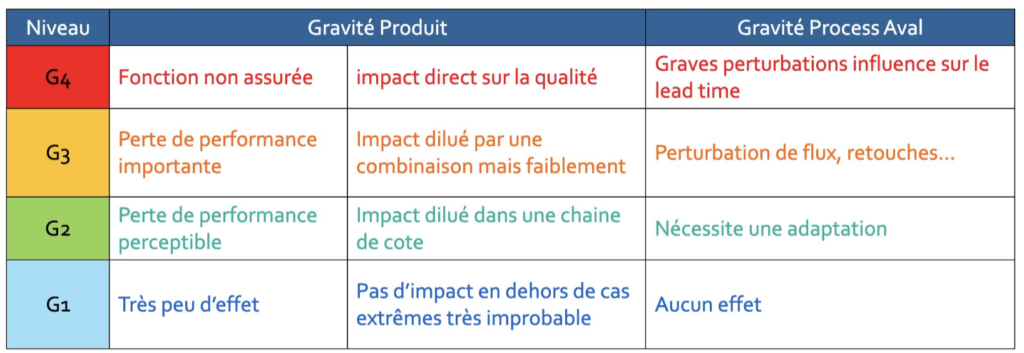
Quality control comes at a cost. Quality control is to quality what inventory is to logistics: sometimes necessary, always something to minimize. To perform quality control effectively, you must know your product well enough to assign a severity level to each characteristic:
- Gravity 4 : The product fails to meet specifications and no longer performs its intended function.
- Gravity 3 : The product works, but not properly.
- Gravity 2 : The product doesn't work quite as well.
- Gravity 1 : The difference is almost imperceptible.
It is this prioritization that then makes it possible to decide where to conduct inspections and how many.
The Culture of the Target
A tolerance is not a range where «everything is equal.» Consider a shaft at the tolerance limit: when mounted in a centered bore, the assembly functions perfectly. When mounted in a bore that is also near its limit, the clearance becomes too small and the assembly eventually seizes up.
The customer doesn’t buy dimensions; they buy a function. A properly centered part will fit correctly with any other conforming part. A «good» part that’s at the edge of its tolerance range is already beginning to compromise quality. The boundary between good and bad on paper does not correspond to the actual boundary of performance. Hence the goal of SPC: not merely to stay within tolerances, but to hit the target.
A Culture of Evidence
Our intuition is unreliable when it comes to statistics. Supplier A delivers one defective part out of twelve, while Supplier B delivers one out of six: intuitively, A is better. However, with samples of this size, a statistical test shows that the difference is not significant, and B might even be the better of the two. Every decision must be based on evidence, not on a hunch.
SPC vs. Acceptance Testing: Two Objectives, Two Approaches
The SPC prevents the default from occurring
The SPC measures parts during production to adjust the process and bring it back on track before defects occur. The control plan is therefore based on a two-way table:
- the severity of the characteristic; ;
- the drift capacity of the process.
A stable characteristic can be measured only at the start of a production run. A characteristic that is prone to drift requires an inspection frequency based on the process’s drift rate. Depending on the situation, one may choose a 100 % inspection, a control chart, or simplified monitoring.
In SPC, quality control provides real added value: it directly improves the quality of the product.
However, the process must be sustainable over the long term. Two obstacles often cause it to fail: entering measurements adds to the operator’s workload without any visible benefit to them, and an experienced setter is reluctant to have software dictate their adjustments. Automating adjustments with APC removes these two obstacles: the operator no longer has to make adjustments, and the adjustments are sent directly to the machine.
Acceptance testing prevents defects from costing more
Incoming inspection takes place after production, on a batch that has already been manufactured. The defect exists; the challenge is to catch it before it is assembled and results in much higher costs further down the line.
Here, the concept of deviation disappears: if a deviation occurred, it is a thing of the past. The inspection plan depends solely on the severity of the characteristics. Above all, inspecting upon receipt adds no value whatsoever. It should be done only where necessary—and nowhere else.
How to Reduce Incoming Inspection Without Losing Information
For a given characteristic, the reduction is carried out in stages (orders of magnitude):
- Attribute-based inspection (pass/fail) : approximately 80 inspections.
- Control Through Measurement (ISO 3951): The measured value is used rather than a simple pass/fail determination. The number of inspections is reduced to around 30.
- Progressive control : When the lot is clearly acceptable or clearly unacceptable, the decision is made without waiting for the entire sample to be tested. This reduces the number of measurements to about 8.
- Revitalization : Based on the supplier's track record, we now inspect only a portion of the lots—for example, one out of every five.
Key point: From 80 to 8 measurements, no information is lost. We simply make better use of the information we have. As for dynamic sampling, it is based on a deliberate compromise: we assume that quality remains consistent between two inspected batches.
Another notable development: skip-lot sampling is now incorporated into the ISO 2859 standard. Until now, each company defined its own rules. Highly regulated sectors, such as the medical and aerospace industries, can now rely on a common regulatory framework. Ellistat’s incoming quality control (IQC) module already incorporates this change.
The cheapest inspection is the one you don't have to repeat
A measurement taken during production has already been recorded. Repeating it during final inspection and then again at the customer's site upon delivery amounts to paying three times for the same information.
Ellistat already allows for the automatic generation of the final inspection based on SPC data. The next step, scheduled for 2027, is to connect the supplier and customer directly: the supplier’s measurements validate the batch upon arrival and trigger the logistics processes, without holding the batch in a quarantine area. The goal: to reduce the number of measurements from three to one.
Conclusion
SPC and Acceptance Inspection are not two variations of the same inspection. SPC is applied during production to prevent defects from occurring; acceptance inspection is performed afterward to prevent them from incurring higher costs. The former is based on process deviation, while the latter focuses on severity and a consistent goal of reduction. In both cases, success depends first and foremost on a shared culture: one centered on the product, the target, and evidence.
FAQ
What is the difference between SPC and acceptance inspection?
The SPC monitors the process during production to correct deviations before they cause defects. Incoming inspection checks batches that have already been produced upon arrival to stop defects from spreading downstream.
How can we reduce the number of inspections at the receiving area?
By progressively shifting from attribute-based inspection to measurement-based inspection, then to progressive inspection, and finally to dynamic inspection, it is possible to reduce the number of inspections per characteristic from approximately 80 to 8 without any loss of information, and then to increase the intervals between inspected lots.
Are there standards for the acceleration of acceptance testing?
Yes. It is now incorporated into the ISO 2859 standard, which allows regulated sectors to rely on a common framework rather than on internal rules.
Why do SPC initiatives often fail?
Mainly because data entry creates extra work for the operator without any visible benefit to him, and because experienced adjusters are reluctant to follow instructions from software. Automating corrections with APC removes these two obstacles.