SPC software
Manage your processes in real time
Ellistat SPC is statistical process control software designed for production facilities. Measurements are entered or reported automatically, control charts and capability indices update instantly, and the operator is alerted as soon as a deviation occurs.
Watch a demo of the SPC software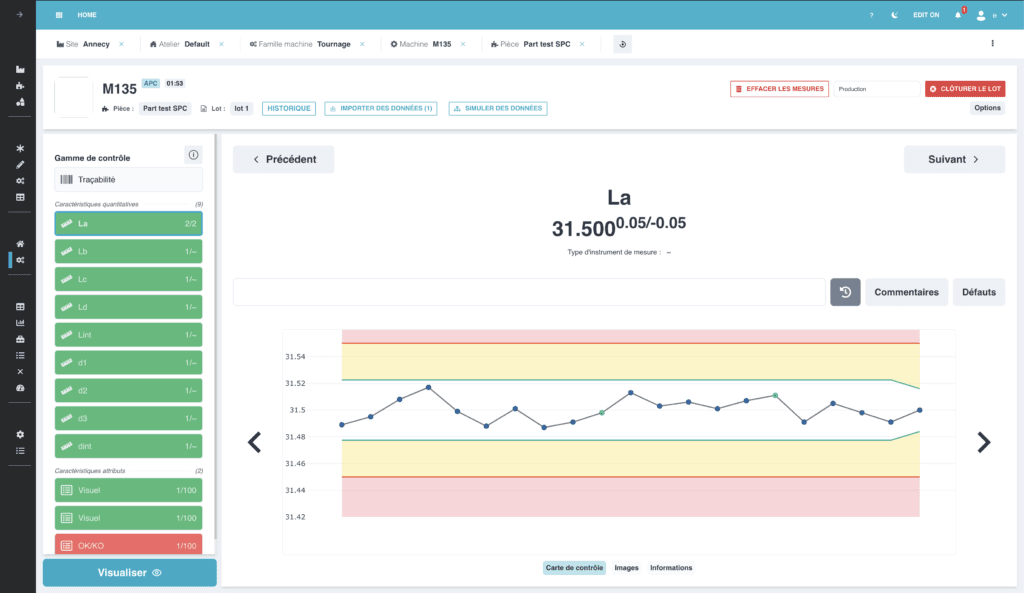
Visualize all your production data simply and instantly
The basics in 30 seconds:
- Control charts and histograms generated and updated in real time.
- Automatic calculation of capability indices (cp, pck, pp, and ppk).
- Simplified operator interface, connection to measurement devices, deviation alerts.
- Fully web-based: No software to install; access via a web browser as a SaaS or on-premises solution.
- Native integration with the other modules in the Ellistat Quality Suite.
Our powerful SPC module is intuitive and easy to deploy.
Which SPC software should you choose?Our Strengths
Connection to Measuring Equipment
Automatically import measurement data into Ellistat, whatever the communication protocol (USB, Bluetooth, RS232, .txt files, etc.), to avoid manual input errors.

Customized Reports
Create your own report templates to provide customized data for each of your customers.

Link With the Module Data Analysis
Switch all your production data in 1 click to a powerful statistics module.
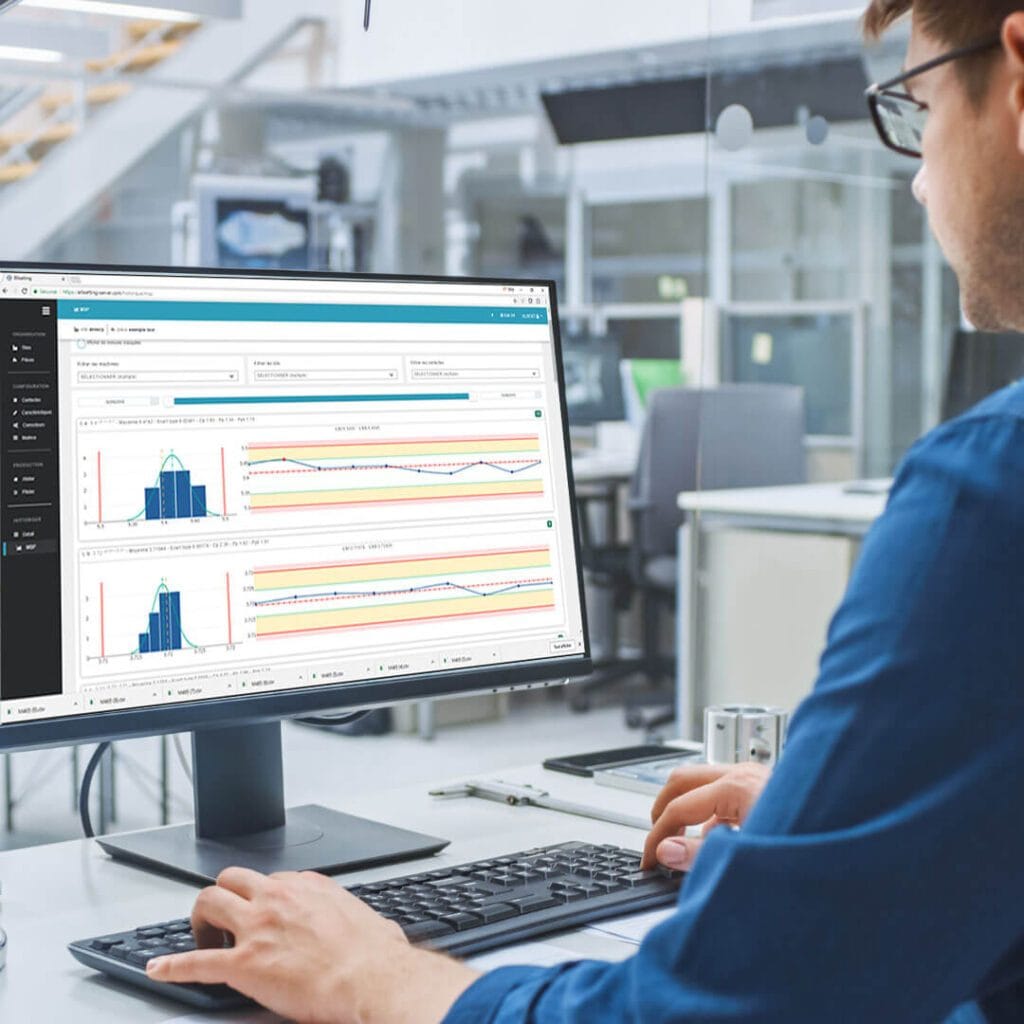
SPC Software: How Does It Work?
SPC (Statistical Process Control) involves monitoring a manufacturing process based on measurements taken at regular intervals. The goal is not to sort parts into good and bad categories, but to identify when the process begins to deviate so that corrections can be made before the tolerance is exceeded.
SPC software automates this process. It collects measurements, plots control charts, calculates limits and capabilities, and flags situations that require action. Whereas a spreadsheet requires you to manually enter values and review the graphs, the software turns each measurement into a decision: continue as is, monitor, or take corrective action.
In a machining shop, this difference is directly reflected in the numbers: less scrap, fewer 100% inspections at the end of the line, and customer audits where proof of quality control is available with just a few clicks.
What is the SPC used for?SPC software automates this process. It collects measurements, plots control charts, calculates limits and capabilities, and flags situations that require action. Whereas a spreadsheet requires you to manually enter values and review the graphs, the software turns each measurement into a decision: continue as is, monitor, or take corrective action.
In a machining shop, this difference is directly reflected in the numbers: less scrap, fewer 100% inspections at the end of the line, and customer audits where proof of quality control is available with just a few clicks.
Key Features of the SPC Software

Create & Manage Inspection Plans
- Defining and managing ranges by context
- Range versioning
- Mass updates from multi-level models

Production Checks and Inspection
- Automatic integration of production data
- Manual and automatic inspection data entry
- Operator-friendly interface

Total Traceability
- Registration of production batches and serial numbers
- Complete control and modification history
- Tracking users and actions taken

Real-Time SPC
- Real-time generation and updating of control charts for measurements (X-bar, R, etc.) and attributes (P, NP, etc.)
- Automatic Recalculation of Control Limits in SPC Software
- Create and display histograms in real time
- Instant detection of drifts and anomalies
- Alerts and notifications in the event of non-compliance
Calculation and Monitoring of Capability Indicators
- Calculation of Short-Term and Long-Term Capability Indices (Cp, Cpk, Pp, Ppk)
- Capability index trend monitoring
- Analysis of process capability to meet specifications
Customizable SPC Report
- Create control reports with customizable templates
- One-Click Report Export for Your Quality Audits
- Integration of graphs and statistical data in reports
Compliance with Standards
- ISO 9001, ISO 9100, ISO 13485 compliant
- Compliance with FDA CFR 21 part 11 requirements
Integration with Existing Systems
- Accessible on Premise / Cloud, full web technology
- API for integration with MES, ERP and other production management systems
- Import and export data via CSV files, etc.
Intuitive User Interface
- Customizable dashboards
- Clear, intuitive view of control data
- Accessibility via various devices (PCs, tablets, smartphones)
Our SPC Methodology:
As-Needed Support!

3 to 5 days of support

1 SPC license with measuring instrument connection

Weekly follow-ups by our project managers
Your Feedback



Read More

SPC and Acceptance Inspection: Preventing Defects from Occurring, or Preventing Them from Costing More
SPC (Statistical Process Control) and incoming inspection are often lumped together under the same category: «inspection.» This is ...

Industrial-Grade Software Suite: The Complete Ellistat Overview
Choosing an industrial-grade software suite often comes down to choosing between two bad options: Founded nine years ago, Ellistat has built itself ...
SPC France software comparison: which tool should you choose?
Statistical process control (SPC) is a must in precision engineering workshops. However, choosing a ...
Meeting ISO 13485 requirements
In regulated sectors, measurement accuracy has a direct influence on compliance with standards such as ISO 13485 in Europe ...