


When one assembly is good and another is bad, this method identifies which component Compare the difference: swap the components between the two assemblies and take the measurements again.
If the defect follows the component, the culprit has been found. If it remains with the assembly, the cause lies in the assembly itself.
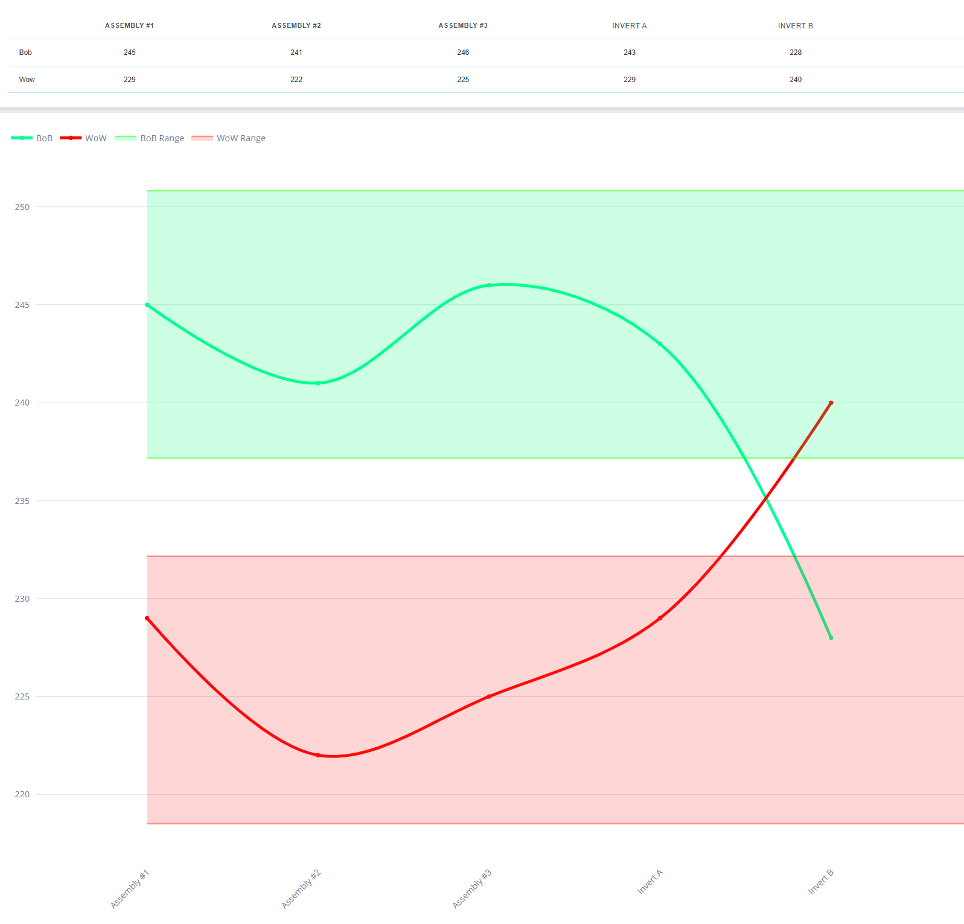
Fill in the edits and the parts, and Ellistat calculates the limits based on successive iterations, displaying the BoB Beach and the WoW Beach.
⚠️ The method requires several assembly/disassembly cycles : This is what allows you to distinguish between the variation caused by the component and that caused by the assembly operation itself. If Ellistat displays the message «Not enough assembly/disassembly operations to calculate the limits,» you must repeat the operation.
💡 This is often the fastest method for a complex assembly: it avoids having to measure all the components, allowing you to focus on the one that matters. Of course, this assumes that the components can be disassembled and reassembled without being damaged.